

Winter Joint Pain in Gippsland: Why Your Knees and Hips Ache in the Cold (and How to Keep Moving)
24 June 2026
Shoulder Pain and the Rotator Cuff: How Physiotherapy Gets You Moving Again (Trafalgar & Morwell Guide)
24 June 2026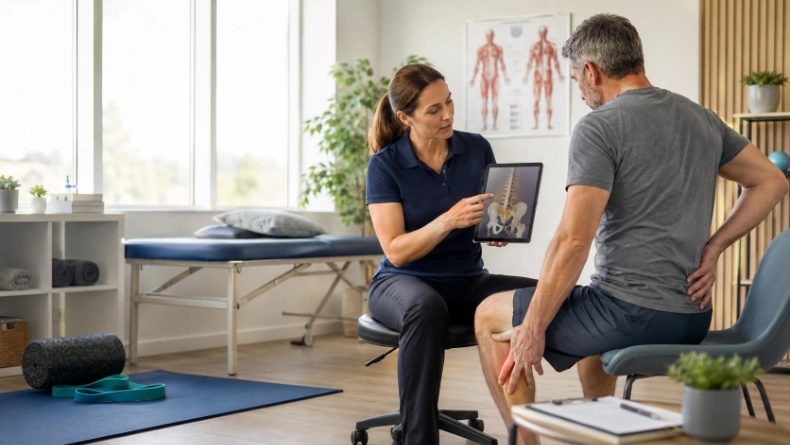
That sharp, shooting pain that travels from your lower back, through your buttock and down the back of your leg has a name — and a solution. Sciatica is one of the most common reasons people across Trafalgar, Morwell and the Latrobe Valley come to see a physiotherapist, and the good news is that most cases settle well with the right hands-on care and a tailored exercise plan. You don’t have to simply put up with it.
At Fulcrum Physio, we help people understand what’s actually causing their sciatica and give them a clear, practical path back to comfortable movement. Here’s a plain-English guide to what sciatica is, why it happens, what genuinely helps, and when it’s time to get assessed.
What Is Sciatica?
Sciatica isn’t a condition in itself — it’s a set of symptoms caused by irritation or compression of the sciatic nerve, the largest nerve in your body. It begins in your lower back, runs deep through each buttock, and travels all the way down the back of the leg to the foot. When something presses on or irritates this nerve where it exits the spine, you feel it along that whole pathway.
The hallmark of sciatica is pain that radiates down one leg, rather than staying in the back alone. For some people it’s a dull, deep ache; for others it’s a sharp, burning or electric-shock sensation. It’s often accompanied by pins and needles, numbness, or a feeling of weakness in the leg or foot.
What Causes Sciatica?
Sciatica happens when the sciatic nerve, or one of the nerve roots that forms it, becomes compressed or irritated. The most common culprits include:
- A bulging or herniated disc — when the soft cushion between two vertebrae presses on a nearby nerve root. This is the most frequent cause, especially in adults under 50.
- Spinal stenosis — a narrowing of the spaces in the spine that the nerves pass through, more common as we get older.
- Tight or overactive muscles — the piriformis muscle deep in the buttock can sometimes irritate the nerve as it passes nearby.
- Wear-and-tear changes in the spine, often described as degeneration or arthritis of the lower back.
- Lifestyle and load factors — long hours sitting, heavy or repetitive lifting, poor lifting technique, and sudden increases in activity can all play a part.
It’s worth remembering that finding the exact source matters, because the most effective treatment can differ depending on the cause. That’s exactly what a physiotherapy assessment is designed to uncover.
Common Sciatica Symptoms to Look Out For
Sciatica can show up in a few different ways. You might notice:
- Pain that travels from the lower back or buttock down the back of one leg
- A sharp, burning, or shooting sensation rather than a dull background ache
- Pins and needles, tingling or numbness in the leg or foot
- Weakness in the leg, or a sense that it might “give way”
- Pain that worsens with prolonged sitting, bending, coughing or sneezing
Symptoms usually affect just one side. If you’re experiencing these, you’re far from alone — and in most cases, the outlook is genuinely positive.
How Physiotherapy Helps Sciatica
Physiotherapy is widely recognised as a first-line treatment for sciatica, and for good reason. Rather than masking the pain, it addresses what’s driving it and helps your body settle the nerve irritation naturally. At Fulcrum Physio, a typical approach combines several elements tailored to you.
A thorough assessment
We start by listening to your story and examining how you move, where your symptoms travel, and what eases or aggravates them. This helps us identify the likely source — disc, joint, nerve or muscle — and rule out anything that needs further investigation. Understanding your specific pattern is what makes treatment effective rather than generic.
Hands-on manual therapy
Gentle joint mobilisation, soft tissue work and targeted release techniques can help reduce muscle tension, improve movement in the lower back and hips, and create more room around the irritated nerve so it can begin to settle and glide normally again.
Tailored exercise and nerve mobilisation
This is where lasting progress happens. Depending on your cause, we’ll prescribe specific movements — for example, gentle extension-based exercises often help disc-related sciatica “centralise” pain back toward the spine, while flexion-based stretches can suit nerve-narrowing problems better. We also use nerve-gliding (neurodynamic) exercises to encourage the sciatic nerve to move freely. Every program is matched to your symptoms and kept pain-free.
Strengthening and prevention
Once symptoms ease, building strength through your core, back and hips helps protect the area and dramatically lowers the chance of a flare-up returning. We also coach you on posture, safe lifting, and how to gradually return to the activities and work you need to do.
What You Can Do at Home
Alongside hands-on treatment, a few simple habits can make a real difference while your sciatica settles:
- Keep gently moving. Long bed rest tends to make sciatica worse. Light, pain-free activity such as short walks helps the nerve recover.
- Break up sitting. Stand up, stretch and move every 30 minutes, especially if you have a desk job. Prolonged sitting is a common aggravator.
- Use heat. A warm pack on the lower back or buttock can ease muscle tension and make movement more comfortable.
- Stay within a comfortable range. Gentle stretches are helpful, but they should never sharply increase the leg pain — let comfort be your guide.
- Mind your lifting. Bend at the hips and knees, keep loads close to your body, and avoid twisting under load.
When Should You See a Physiotherapist — or a Doctor?
Most sciatica improves over a few weeks with the right guidance, but you shouldn’t have to navigate it alone or simply wait and hope. It’s worth booking an assessment if your pain is limiting your work, sleep or daily life, if it isn’t improving after a week or two, or if it keeps coming back.
Some symptoms need urgent medical attention. Seek care straight away if you experience numbness around the groin or buttocks, loss of bladder or bowel control, or rapidly worsening weakness in both legs. These are rare, but they’re important to act on quickly. When in doubt, a quick conversation with your physio or GP is always the safest step.
How Fulcrum Physio Can Help
At Fulcrum Physio, every appointment is one-on-one, so you get the time and attention to properly understand your sciatica and your recovery. We combine hands-on treatment with a clear, personalised plan that puts you back in control. For people across Trafalgar, Morwell and the wider Gippsland region, we offer:
- Detailed assessment to pinpoint the true source of your nerve pain
- Hands-on manual therapy to ease tension and restore movement
- Personalised exercise and nerve-mobilisation programs matched to your specific cause
- Dry needling to help release tight, painful muscles contributing to your symptoms
- Clinical Pilates and strength work to build lasting support around your spine and hips
- Home visit and telehealth options if getting to the clinic is difficult while you’re in pain
Whether your sciatica has come on suddenly or has been nagging for months, our goal is the same — to relieve your pain, restore your movement, and help you get back to the activities you love. You can explore our full range of physiotherapy services or read more about our approach any time.
Don’t Let Sciatica Hold You Back
Sciatica can be painful and frustrating, but for the vast majority of people it’s very treatable — and the sooner you address it, the faster and smoother your recovery tends to be. With the right hands-on care and a tailored exercise plan, you can calm the nerve, rebuild your strength, and get back to moving freely.
If that shooting leg pain is getting in the way of your day, our team would love to help. Book your appointment with Fulcrum Physio today, or call us on +61 412 743 269 — and let’s get you moving comfortably again.
For more general information on sciatica and back pain, you can also visit the Victorian Government’s Better Health Channel or Healthdirect Australia. This article is general information only and is not a substitute for individual advice from your physiotherapist or doctor.